Best Mobility Aids for Seniors (2026 Guide)
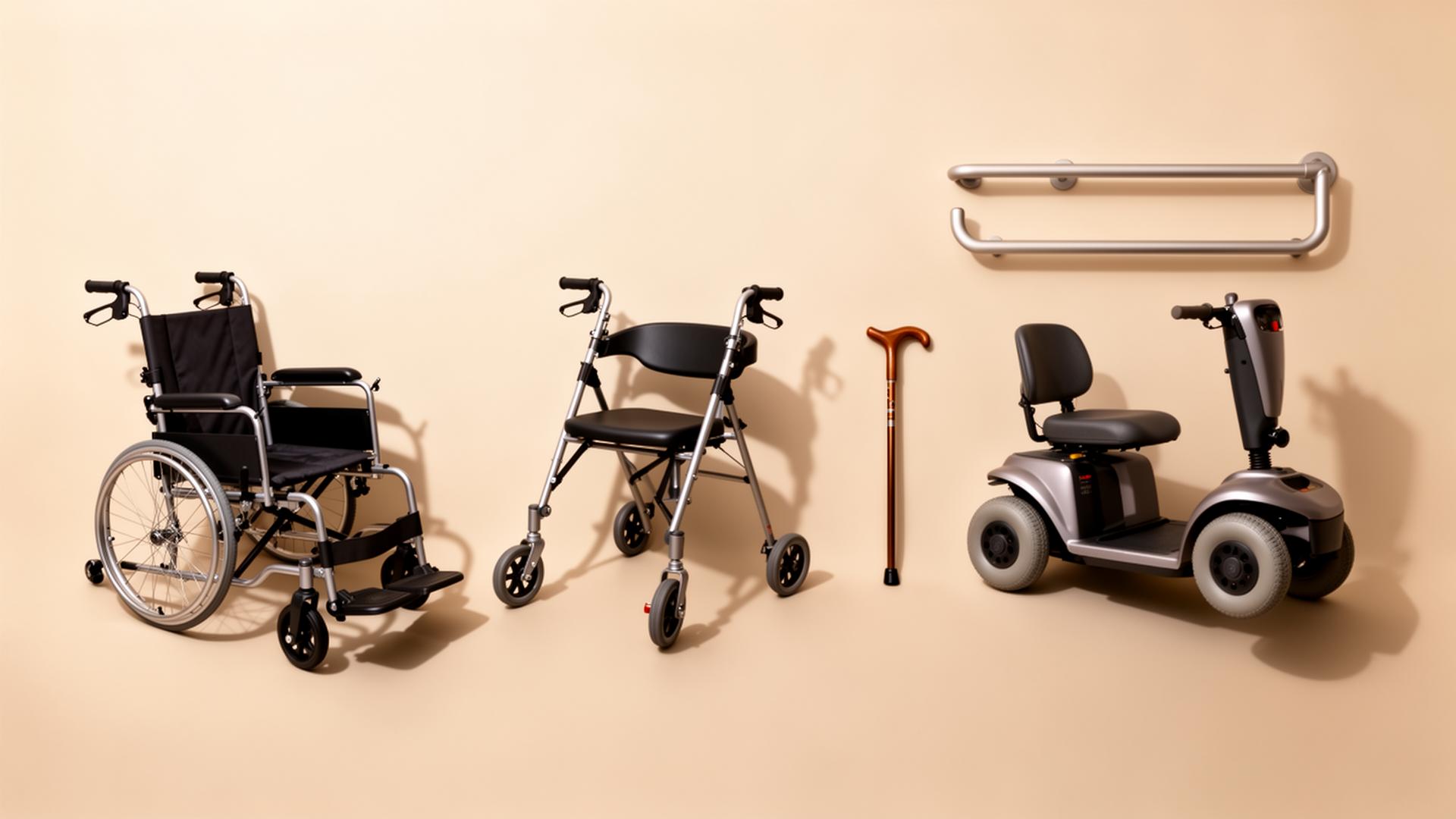
The best mobility aids for seniors in 2026 are the Medline Lightweight Transport Wheelchair ($159) for caregiver-assisted travel, the Drive Nitro Rollator ($219) for active seniors who tire on long walks, the Pride Go-Go Elite Traveller scooter ($1,199) for outdoor independence, and a Drive Medical shower chair plus Vive toilet safety rail ($110 combined) to prevent bathroom falls. Match the device to a clinician's assessment, not Amazon reviews alone.
One in four adults over 65 falls every year. Most of those falls happen at home, in the bathroom or on a flight of stairs, and the single biggest factor that determines whether the senior recovers or transitions to assisted living is whether they had the right mobility aid before the fall — not after. This pillar guide exists to help families make that decision early, calmly, and with the right product.
We cover the four core categories of senior mobility — wheelchairs, walkers and rollators, scooters, and bathroom safety equipment — plus how to navigate Medicare, how to size devices correctly, and which inexpensive home modifications cut fall risk the most. Every product below is currently sold, comes from a brand with real customer service, and has been chosen for safety and longevity over price.
If you are buying for a parent, this guide is intentionally written so that you can hand them the recommendations alongside a clinician's input. Mobility decisions go better when seniors are part of them — independence is the entire point.
How to Choose the Right Mobility Aid
Match the device to the level of support actually needed today — not the worst-case scenario, and not the level the senior had two years ago. Over-equipping kills independence almost as fast as under-equipping causes falls. Use this decision flow:
- Steady on their feet, just tires easily. Start with a single-point cane or a 4-wheel rollator with a seat. The seat is the entire benefit: it converts every walk into "I can rest whenever I want."
- Unsteady, occasional falls, can still bear weight. Standard 2-wheel or no-wheel walker, fitted by a physical therapist. The pause-and-step pattern is what prevents falls.
- Cannot walk safely beyond the house, but can transfer. Lightweight transport wheelchair for outings, plus a rollator indoors. This is the most common configuration for seniors 75+.
- Wants outdoor independence (errands, parks, family events). 3- or 4-wheel mobility scooter. 4-wheel for stability, 3-wheel for tighter indoor turning.
- Limited transfer ability or full-time wheelchair use. Folding electric wheelchair or full-size power chair, plus patient lift and transfer board.
Always pair the primary mobility device with a bathroom safety setup. Bathrooms are where independent seniors fall, and the equipment is cheap relative to a hip-fracture hospitalization.
Best Wheelchairs for Seniors in 2026
Three sub-categories matter for seniors: lightweight transport chairs (pushed by a caregiver), self-propel manual chairs, and folding electric chairs for independent outdoor use. The right pick depends on whether the senior, the caregiver, or both will be moving the chair most often.
| Product | Rating | Price | Key Features | Action |
|---|---|---|---|---|
| Medline Lightweight Transport Wheelchair | 4.7/5 ⭐ | $159 |
| View Deal |
| Drive Medical Cruiser III | 4.6/5 ⭐ | $269 |
| View Deal |
| Foldawheel PW-1000XL Electric | 4.5/5 ⭐ | $2,395 |
| View Deal |
| Drive Medical Sentra EC Bariatric | 4.6/5 ⭐ | $429 |
| View Deal |
1. Medline Lightweight Transport Wheelchair — Best Overall
Best for: Caregiver-assisted outings, medical appointments, travel. Pricing: $159.
At just 24 lbs the Medline transport chair is the chair most caregivers can actually lift in and out of a car trunk. Hand brakes are within easy reach of the person pushing, the 300 lb capacity covers most users, and the steel frame folds flat in under five seconds. See our full lightweight wheelchair review for additional picks.
2. Drive Medical Cruiser III — Best Self-Propel
For seniors who still have upper-body strength and want to propel themselves indoors, the Cruiser III is the long-standing benchmark. Padded armrests, quick-release rear wheels for transport, and seat widths from 16" to 22" so it can be sized correctly to the user.
3. Foldawheel PW-1000XL — Best Folding Electric
The folding-power category has matured fast. The PW-1000XL folds in two seconds, weighs around 56 lbs total, and uses an airline-approved lithium battery so it actually flies. Range is honest 13 miles. For frequent travelers, this is the chair that prevents seniors from giving up cruises and family vacations. Full breakdown in our folding electric wheelchair guide.
4. Drive Sentra EC — Best Bariatric
For users over 300 lbs, standard chairs are unsafe. The Sentra EC is rated to 500 lbs, has a 24" seat width, and a reinforced steel cross-brace. See our bariatric wheelchair guide for more high-capacity options.
Best for most seniors:
Medline lightweight transport chair for the car, paired with a Drive Nitro rollator indoors. Together under $400, covers 90% of real-world needs.
Best Walkers & Rollators
Rollators (4 wheels, brakes, seat) suit active seniors who tire easily. Standard walkers (2 wheels or none) are safer for seniors with poor balance because they force a pause-and-step gait. Upright walkers reduce wrist and back strain for seniors who hunch. Knee walkers are specifically for foot or ankle surgery recovery.
| Product | Rating | Price | Key Features | Action |
|---|---|---|---|---|
| Drive Medical Nitro Euro Style Rollator | 4.8/5 ⭐ | $219 |
| View Deal |
| Vive Mobility 3 Wheel Walker | 4.6/5 ⭐ | $129 |
| View Deal |
| ELENKER Upright Walker | 4.5/5 ⭐ | $189 |
| View Deal |
| Drive Medical All-Terrain Knee Walker | 4.7/5 ⭐ | $229 |
| View Deal |
Drive Nitro Euro Style Rollator — Best Overall
The benchmark rollator for the past three years. Aluminum frame keeps weight to 17 lbs, the 10" front wheels handle curbs and uneven sidewalks, the seat is padded enough for real rest, and it folds one-handed for the car. Full rundown in our rollator walker guide.
Vive 3-Wheel Walker — Best for Narrow Spaces
3-wheel design turns tighter than 4-wheel rollators, which makes it the right call for older homes with narrow hallways and doorways. No seat, but the storage pouch and cup holder genuinely get used.
ELENKER Upright Walker — Best Posture Support
Forearm supports let the user walk upright instead of hunched over standard walker handles. Significantly reduces lower-back, shoulder and wrist strain — a major quality-of-life upgrade for seniors with arthritis or kyphosis.
Drive All-Terrain Knee Walker — Best for Surgery Recovery
Pneumatic tires handle gravel, grass and small bumps that destroy hard-wheel knee scooters. The right device for 6–10 weeks of post-surgery non-weight-bearing recovery. Full review in our knee walker guide.
Best Mobility Scooters for Seniors
Scooters fall into three real-world buckets: travel scooters that disassemble for car trunks (3 wheels, lightweight), 4-wheel outdoor scooters with longer range and better stability, and folding airline-approved scooters for seniors who fly. Avoid sub-$700 unknown brands — when the battery or controller dies, you'll discover replacement parts don't exist.
| Product | Rating | Price | Key Features | Action |
|---|---|---|---|---|
| Pride Mobility Go-Go Elite Traveller | 4.7/5 ⭐ | $1,199 |
| View Deal |
| Drive Medical Spitfire Scout 4 | 4.6/5 ⭐ | $899 |
| View Deal |
| EV Rider Transport AF+ Folding | 4.5/5 ⭐ | $1,649 |
| View Deal |
Pride Go-Go Elite Traveller — Best Overall
Disassembles into 5 pieces, the heaviest weighing 31 lbs — manageable for most caregivers. 12-mile range, 300 lb capacity, and Pride's nationwide service network means parts and battery replacements are actually available 5 years from now. See our complete mobility scooter guide.
Drive Spitfire Scout 4 — Best Outdoor Stability
4-wheel design handles uneven sidewalks, ramps and packed grass that 3-wheel scooters tip on. Delta tiller is friendly for arthritic hands. The right pick for seniors who use a scooter daily outdoors.
EV Rider Transport AF+ — Best Folding
Folds and unfolds via remote control — important for seniors traveling solo. Airline-approved battery, fits in most sedan trunks unfolded. The premium pick for cruise and air travel.
Bathroom & Home Safety Essentials
Most senior falls happen in the bathroom. The four items below address that risk for under $250 combined — the single highest-ROI mobility investment any family can make, regardless of which wheelchair, walker or scooter the senior uses.
| Product | Rating | Price | Key Features | Action |
|---|---|---|---|---|
| Drive Medical Bathroom Safety Shower Chair | 4.7/5 ⭐ | $59 |
| View Deal |
| Vive Toilet Safety Rails | 4.7/5 ⭐ | $54 |
| View Deal |
| Stander BedCane Adult Bed Rail | 4.6/5 ⭐ | $99 |
| View Deal |
| OasisSpace Stand Assist | 4.6/5 ⭐ | $219 |
| View Deal |
Drive Medical Shower Chair
Drainage holes, non-slip rubber feet, adjustable legs, 300 lb capacity. The single most important bathroom item for seniors. Detailed picks in our shower chair guide.
Vive Toilet Safety Rails
Padded armrests, tool-free clamp-on installation, 300 lb capacity. Reduces rise-from-toilet strain dramatically and prevents the most common bathroom fall. More options in our toilet safety rail guide.
Stander BedCane Adult Bed Rail
Pivoting handle assists sitting up from bed — particularly useful for seniors with arthritis or limited core strength. See our bed rail review for additional options.
OasisSpace Stand Assist
Helps seniors rise from chairs and couches without grabbing furniture. Compare full picks in our standing aid guide.
Picks by Situation
Active senior who tires on long walks
Drive Nitro Rollator + a single-point cane for short indoor moves. Add a shower chair pre-emptively.
Senior with recent falls, lives alone
Standard 2-wheel walker fitted by a PT + bathroom safety kit (shower chair, toilet rails, grab bars) + bed rail. Medical alert pendant strongly recommended.
Senior who can't walk distances but still transfers
Medline transport wheelchair for outings + Drive Nitro rollator at home + full bathroom safety setup.
Senior who travels or flies frequently
Foldawheel PW-1000XL folding power chair or EV Rider Transport AF+ folding scooter. Both airline-approved batteries.
Post-foot or ankle surgery recovery
Drive All-Terrain Knee Walker + raised toilet seat. Skip crutches — falls are common and recovery times are longer.
Bariatric senior (over 300 lbs)
Drive Sentra EC bariatric wheelchair + heavy-duty bariatric rollator + grab bars rated to 500+ lbs.
Medicare, Insurance & How to Pay
Medicare Part B covers Durable Medical Equipment (DME) when a doctor documents medical necessity and the supplier is Medicare-enrolled. The basics:
- Typically covered (80% after deductible): manual wheelchairs, power wheelchairs, scooters, walkers, rollators, hospital beds, patient lifts, commode chairs.
- Typically NOT covered: shower chairs, raised toilet seats, grab bars, bath transfer benches — classified as comfort or convenience items.
- Required documentation: in-person physician evaluation within the past 6 months, a written prescription, and a Certificate of Medical Necessity for power chairs and scooters.
- Medicare Advantage and Medigap often expand coverage — call the plan before assuming bathroom safety items are out of pocket.
- VA benefits for eligible veterans cover essentially the entire mobility category, including home modifications.
For families paying out of pocket, manufacturer-direct purchasing and certified refurbished programs (Pride, Drive Medical, Golden Technologies) cut new-equipment pricing by 30–50% with full warranties intact.
Proper Fit & Sizing
A wrong-fit aid is dangerous. Quick reference:
- Walker/rollator handle height: top of handle should reach the user's wrist crease when standing with arms relaxed at the sides.
- Wheelchair seat width: measure across the widest part of the hips and add 1 inch on each side.
- Wheelchair seat depth: from the back of the hip to the back of the knee, minus 2 inches.
- Scooter weight capacity: never exceed 80% of the rated capacity — frequent use at the upper limit shortens battery and motor life dramatically.
- Cane length: when held at the user's side, the handle should reach the wrist crease.
Common Mistakes to Avoid
- Buying based on what the senior "might need in 5 years" instead of what they need now. Over-equipping kills independence.
- Skipping the bathroom safety setup. It's the cheapest, highest-ROI fall prevention available.
- Buying unknown-brand scooters or power chairs to save $400. Replacement batteries and parts are non-existent after 12–18 months.
- Forcing a rollator on a senior with poor balance. Rollators can be pulled forward into a fall.
- Not getting a physical therapy assessment. A 30-minute PT consult prevents the most expensive purchase mistakes.
- Storing the device away because "it makes them look old." Devices that aren't used cause the falls families were trying to prevent.
Are Mobility Aids Worth the Investment?
Pros
- Restores independence — most seniors can resume errands, gardening and travel within days of choosing the right aid
- Significantly reduces fall risk, the #1 cause of injury hospitalizations for adults over 65
- Cheaper long-term than home health aides or assisted living transitions
- Many devices (wheelchairs, scooters, lifts, walkers) are covered or partially reimbursed by Medicare Part B with a doctor's prescription
- Modern aids are lighter, foldable and far less institutional-looking than 10 years ago
- Better mobility correlates strongly with reduced depression and cognitive decline
Cons
- Wrong-fit devices (too tall, too wide, too heavy) cause new injuries and abandonment
- Power scooters and electric wheelchairs need charging routines and battery storage planning
- Bathroom and stair installations may require minor home modifications
- Some Medicare-covered devices require specific documentation and 'in-person' physician evaluation
- Cheap Amazon-only brands often lack replacement parts after 12–18 months
The honest answer: yes, dramatically so. A $400 mobility setup that prevents one fall pays for itself many times over — the average hip-fracture hospitalization for an adult over 65 costs $40,000 and starts a steep decline that ends in assisted living for roughly half of patients within a year. Cheap insurance, easy decision.
Frequently Asked Questions
Final Verdict
If you take only one thing from this guide: pair a primary mobility aid (wheelchair, walker or scooter) with a proper bathroom safety setup. The two together prevent the falls that cause the hospitalizations that end independence. Everything else is optimization on top of that foundation.
Start with a clinician's input, size the device correctly, and buy from a brand that will still exist — and still stock parts — in five years. Done that way, the right mobility aid keeps a senior in their own home, on their own schedule, for years longer than the alternative.
Quick recommendation
- Best transport wheelchair: Medline Lightweight
- Best rollator: Drive Nitro Euro Style
- Best mobility scooter: Pride Go-Go Elite Traveller
- Best folding power chair: Foldawheel PW-1000XL
- Best bathroom safety pair: Drive Medical Shower Chair + Vive Toilet Safety Rails