Best At-Home Beauty Devices (2026 Guide)
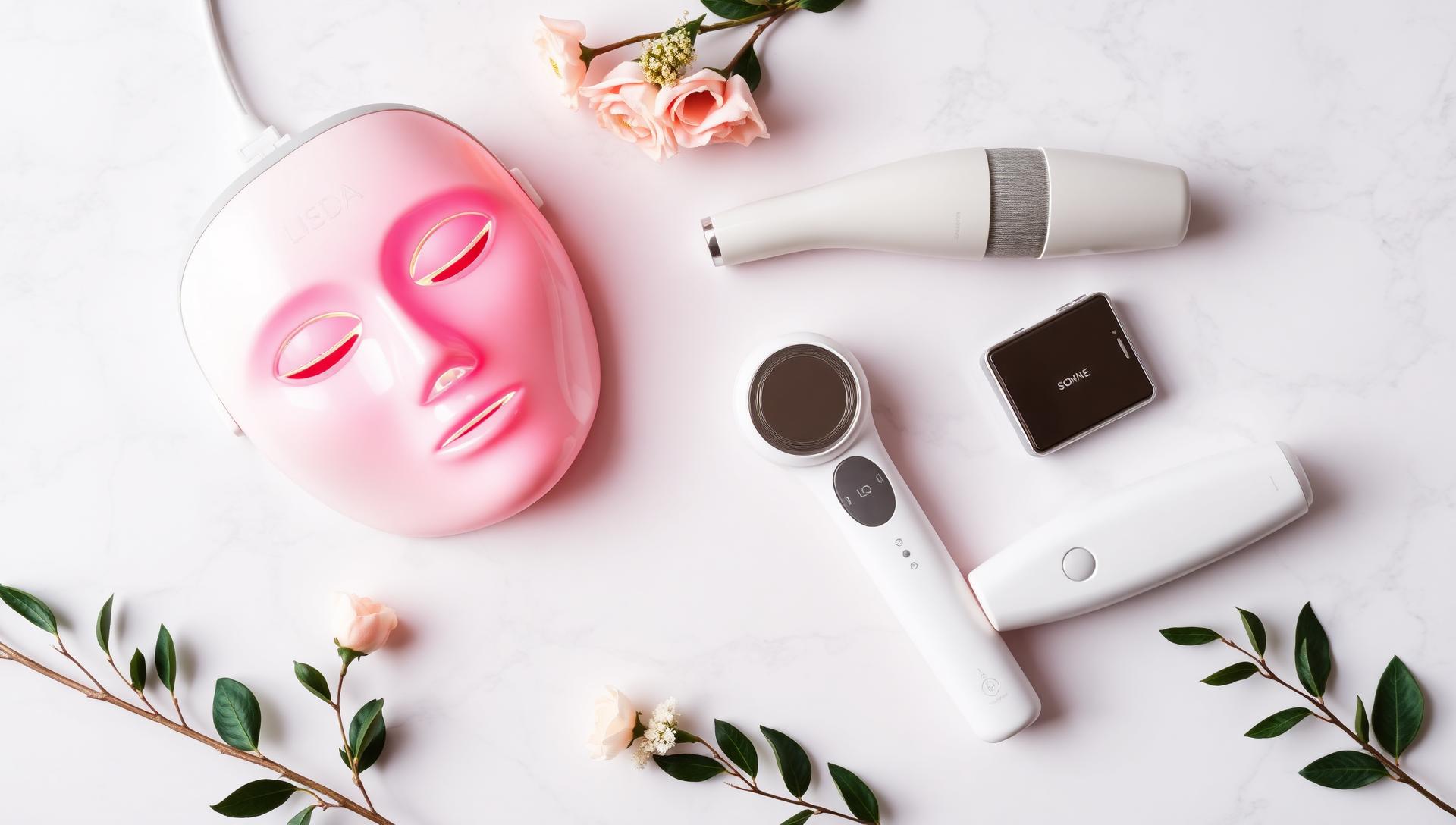
The best at-home beauty devices in 2026 are the Omnilux Contour Face ($395) for LED light therapy, the NuFACE Trinity+ ($395) for microcurrent lifting, the TriPollar Stop X ($469) for RF skin tightening, and the PMD Clean Pro ($199) for ultrasonic cleansing. Use them weekly and you'll see clinic-grade results in 8–12 weeks.
A decade ago, the only way to get clinical-grade skin treatments was a dermatologist's office at $200–$600 a visit. In 2026, the same wavelengths, the same currents, and increasingly the same radiofrequency technology live on your bathroom counter. The difference is that at-home beauty devices reward consistency — three sessions a week for three months will outperform an occasional spa visit every single time.
This pillar guide is the parent resource for every at-home beauty device we recommend on Best Product Reviews Hub. We cover the four technologies that have the clearest published evidence — LED light therapy, microcurrent, radiofrequency (RF), and ultrasonic — plus how to layer them into a weekly routine that produces visible, photographable change.
We're picky for a reason. Most of the "viral" devices on social media are underpowered, uncleared, or just rebranded knockoffs of the real thing. The picks below are FDA-cleared where applicable, backed by clinical data, and built well enough to last 3–5 years of weekly use.
How At-Home Beauty Devices Actually Work
The four technologies in this guide do four very different things — confuse them and you'll buy the wrong device. Here's the honest version of what each one actually does at a cellular level.
- LED light therapy uses specific wavelengths (typically 633nm red and 830nm near-infrared) to penetrate the skin and stimulate mitochondrial activity. The downstream effect: more collagen, faster healing, reduced inflammation. Blue light (415nm) targets acne-causing bacteria.
- Microcurrent sends very low-level electrical pulses (measured in microamps, millionths of an amp) through facial muscles. This re-educates muscle tone — think of it as a workout for your face. The "snatched jawline" trend on TikTok is microcurrent.
- Radiofrequency (RF) heats the deeper dermis to roughly 40–42°C, which both contracts existing collagen immediately and triggers a remodeling response that builds new collagen over the following 12 weeks.
- Ultrasonic devices use high-frequency vibration (typically 24,000–28,000 Hz) to deep-clean pores, loosen blackheads, and push skincare actives deeper into the skin.
None of these are interchangeable. A microcurrent tool will not clear blackheads, an LED mask will not lift a jawline, and an ultrasonic spatula will not build collagen. Choose by goal, not by hype.
Best LED Light Therapy Masks in 2026
LED is the most evidence-backed at-home technology in this guide. Look for FDA-cleared masks with published wavelength data — red light at 630–660nm and near-infrared at 810–850nm. Anything outside that range is decorative.
| Product | Rating | Price | Key Features | Action |
|---|---|---|---|---|
| Omnilux Contour Face | 4.8/5 ⭐ | $395 |
| View Deal |
| CurrentBody Skin LED Mask | 4.7/5 ⭐ | $385 |
| View Deal |
| Solawave Wrinkle Retreat Mask | 4.6/5 ⭐ | $249 |
| View Deal |
| Dr. Dennis Gross DRx SpectraLite | 4.7/5 ⭐ | $455 |
| View Deal |
1. Omnilux Contour Face — Best Overall
Best for: Fine lines, dullness, post-procedure healing. Skin types: all, including sensitive. Pricing: $395.
Omnilux is the most-cited at-home LED brand in dermatology offices. The Contour Face delivers FDA-cleared 633nm red and 830nm near-infrared wavelengths in a flexible silicone mask that contours to your face — so the diodes actually sit against the skin where the light needs to be. Ten-minute sessions, three to five times a week, produce visibly smoother texture in about six weeks. Read our full LED mask comparison for the side-by-side.
2. CurrentBody Skin LED Mask
CurrentBody publishes clinical data showing 35% wrinkle reduction in 12 weeks. The dual wavelengths match Omnilux on paper; the silicone is slightly less flexible. Both are excellent — pick on price/availability.
3. Solawave Wrinkle Retreat Mask — Best Value
If $400 isn't in the budget, the Solawave at $249 is the most credible step-down. Slightly fewer diodes than Omnilux but the wavelength accuracy is honest and the build is solid.
4. Dr. Dennis Gross DRx SpectraLite — Best for Acne
Combines red and blue LEDs in a rigid mask. The blue light tackles active breakouts; the red light handles post-acne marks. Three minutes per session is enough.
5. Aduro 7+1 LED Mask — Best Multi-Wavelength Pick
Aduro's 7+1 mask offers seven LED colors plus near-infrared in a single rigid unit — useful if you want to experiment with green (pigmentation), yellow (redness), and cyan (calming) beyond the red/blue basics. CE-marked, widely used in European clinics, and a smart pick if you want one mask to cover several concerns rather than stacking devices.
Best for most people:
Omnilux Contour Face if you're investing for the long term; Solawave if you want a clean entry point into LED.
Best Microcurrent Devices
Microcurrent is the closest thing to a non-surgical facelift you can do at home. The category leader has been NuFACE for over a decade, and the new Trinity+ is the strongest at-home unit on the market.
| Product | Rating | Price | Key Features | Action |
|---|---|---|---|---|
| NuFACE Trinity+ | 4.7/5 ⭐ | $395 |
| View Deal |
| Foreo Bear 2 | 4.5/5 ⭐ | $299 |
| View Deal |
| Ziip Halo | 4.6/5 ⭐ | $349 |
| View Deal |
NuFACE Trinity+ — Best Overall
335 microamps, multiple intensity levels, and an app that guides you through 5-minute lift, contour, and smoothing routines. Used 5x/week for 8 weeks, the jawline and cheekbone results are obvious in photos. See our microcurrent jowls comparison for full before/after analysis.
Foreo Bear 2
Pairs microcurrent with T-Sonic pulsations for a gentler, massage-like experience. Five intensity levels make it friendlier for beginners. Slightly less powerful than the NuFACE but easier to use daily.
Ziip Halo — Best for Targeted Treatments
Combines microcurrent with nanocurrent in a single sphere, controlled by the Ziip app's library of treatments. Great if you want to target specific concerns (acne scars, undereye puffiness, jawline) on different days.
Important: microcurrent requires conductive gel. We covered the best budget alternatives to NuFACE's branded gel in our conductive gel guide.
Best RF Skin Tightening Devices
RF is the slowest of the four to show results — and the most rewarding. Twelve weeks of consistent weekly sessions can visibly tighten loose jowls, the upper neck, and crepey eye area.
| Product | Rating | Price | Key Features | Action |
|---|---|---|---|---|
| TriPollar Stop X | 4.7/5 ⭐ | $469 |
| View Deal |
| NuFACE Trinity+ RF Attachment | 4.5/5 ⭐ | $229 |
| View Deal |
| Silk'n Titan | 4.4/5 ⭐ | $399 |
| View Deal |
TriPollar Stop X — Best Overall
TriPollar pioneered multi-electrode RF and the Stop X is the most clinically validated at-home unit in the category. It delivers focused, even heat at 40–42°C — the sweet spot for collagen remodeling without burning. See the full RF tightening review.
NuFACE Trinity+ RF Attachment
If you already own a Trinity+, the RF attachment is a sensible add-on — you get microcurrent + RF without buying two devices.
Silk'n Titan
Combines RF, infrared, and LED in a larger treatment head — better suited if you also want to treat neck, décolletage, and arms.
NEWA RF — Best for Jawline & Neck
FDA-cleared 3DEEP RF that focuses energy in the deep dermis where collagen lives. Clinical studies show measurable wrinkle reduction at 12 weeks. The handpiece is bigger than the TriPollar, making it the easier pick for treating jawline, jowls, and the front of the neck in one pass.
CurrentBody Skin RF + LED — Best Hybrid
CurrentBody's RF unit pairs radiofrequency with red LED in a single handset, so you get collagen heating and photobiomodulation in the same 10-minute session. A good "one device to rule them all" pick for people who don't want a separate LED mask and RF wand.
Best Ultrasonic & Cleansing Devices
Ultrasonic devices won't replace a derm visit, but they make a daily difference in pore clarity, blackhead reduction, and how well your serums absorb.
| Product | Rating | Price | Key Features | Action |
|---|---|---|---|---|
| PMD Clean Pro | 4.6/5 ⭐ | $199 |
| View Deal |
| Dermaflash Dermapore+ | 4.5/5 ⭐ | $159 |
| View Deal |
| Foreo Luna 4 | 4.6/5 ⭐ | $279 |
| View Deal |
PMD Clean Pro — Best Overall
Pairs sonic cleansing bristles with a rose quartz massage head that delivers a cooling, depuffing finish. Full ultrasonic scrubber review here.
Dermaflash Dermapore+
A true ultrasonic spatula — flips into "infuse" mode to push serums deeper. Great for blackhead-prone skin.
Foreo Luna 4
Daily cleansing brush with T-Sonic pulses. Best long-term battery life in the category — one charge lasts close to a year.
Best Facial Steamers
Facial steamers are the most underrated at-home beauty tool. A 10-minute warm steam softens sebum plugs, opens pores ahead of extractions, and dramatically improves how well serums penetrate. They won't build collagen — but they make every other device in your routine work harder.
- Vanity Planet Aira Ionic Facial Steamer — nano-ionic mist, 30-second warmup, the long-standing best seller. See the full facial steamer review.
- Dr. Dennis Gross Pro Facial Steamer — clinic-grade nano mist, larger tank for longer sessions.
- Pure Daily Care NanoSteamer — best-value 3-in-1 with humidifier and towel warmer functions.
Best practice: steam first, then extract with the Dermaflash Dermapore+, then apply your serums, then close with LED.
Best Gua Sha & Ice Globe Tools
Manual tools sound old-school next to LED and RF, but lymphatic drainage is the fastest way to depuff a face — and the cheapest entry point into a real device routine. Five minutes of gua sha after cleansing changes how your face looks in photos by the end of the week.
- Mount Lai Jade Gua Sha — heavy, hand-finished jade with the right edge profile for jawline sculpting. See our gua sha comparison.
- Esarora Ice Globes — borosilicate glass, freezer-safe, the cult depuffing tool. Full ice globe guide.
- Skin Gym Jade Roller — classic morning lymphatic flush. Jade roller review.
These tools are the perfect "gateway" purchase — under $40, immediate visible effect, and they teach you the facial-massage choreography that makes microcurrent results even better later.
Best Beauty Devices for Anti-Aging
Anti-aging is not one problem — it's three: loss of collagen, loss of muscle tone, and loss of dermal density. No single device solves all three. The most effective at-home anti-aging stack pairs LED (collagen), microcurrent (tone), and RF (density).
The 2026 anti-aging trio:
- Omnilux Contour Face — collagen stimulation, 4× per week.
- NuFACE Trinity+ — muscle tone and lifting, 5× per week.
- TriPollar Stop X — dermal tightening, 1× per week.
Total weekly time: ~90 minutes. Expected result window: 8–12 weeks for visible change.
If you're starting fresh and want a single device that touches all three pathways, the CurrentBody Skin RF + LED is the best single-purchase anti-aging tool of 2026.
Best Beauty Devices for Acne-Prone Skin
Acne responds to two device categories: blue light (kills C. acnes bacteria at 415nm) and gentle ultrasonic cleansing (clears sebum without abrasion). Skip heavy microcurrent gels and RF during active breakouts — they can clog or inflame compromised skin.
- Dr. Dennis Gross DRx SpectraLite Acne — blue + red LED, 3-minute sessions, dermatologist-developed.
- Foreo Luna 4 (sensitive) — daily silicone cleansing without bacterial buildup from bristled brushes.
- Aduro 7+1 — blue + cyan for actives, red + yellow for redness fade. The most flexible mask for combination acne skin.
- Dermaflash Dermapore+ — ultrasonic spatula for blackhead-prone zones (avoid active pustules).
Realistic timeline: 2 weeks for fewer new breakouts, 6 weeks for clearer overall tone, 12 weeks for post-acne mark fading.
Best Beauty Devices for Sensitive Skin
Sensitive skin doesn't mean you can't use devices — it means choosing technologies that don't disrupt the barrier. Avoid abrasive brushes, dermaplaning blades, and high-heat RF until your barrier is calm.
- Omnilux Contour Face — LED is non-thermal, non-abrasive, and actively calming. Safe for rosacea-prone skin.
- Foreo Bear 2 — Anti-Shock System automatically adjusts current for sensitive skin; gentlest microcurrent on the market.
- Esarora Ice Globes — cold therapy reduces vascular reactivity and calms flushing in minutes.
- Vanity Planet Aira Steamer — gentle nano-mist hydration without friction.
Avoid: stiff bristle cleansing brushes, dermaplaning during flare-ups, and any "wellness" device with no FDA clearance and no published wavelength data.
How Long Does It Take to See Results?
The single most common reason people abandon a $400 device is unrealistic expectations in the first 30 days. Here's the honest, technology-by-technology timeline:
- Microcurrent: Immediate "snatched" effect lasting ~24 hours after every session. Cumulative lift visible at 4–6 weeks, dramatic at 12 weeks.
- LED light therapy: Skin tone evens within 2–3 weeks. Fine-line softening at 6–8 weeks. Peer-reviewed wrinkle-reduction studies measured outcomes at 12 weeks.
- RF skin tightening: Mild firming visible at 4 weeks. Real jawline contour change at 10–12 weeks. Collagen remodeling continues for ~6 months after a treatment cycle.
- Ultrasonic cleansing: Pores look clearer within a single session. Long-term blackhead reduction at 3–4 weeks.
- Blue-light acne therapy: Reduced active inflammation at 2 weeks. Clearer baseline skin at 6–8 weeks.
If you're going to quit, quit before you buy — not 4 weeks in, when the science says you're about to see the payoff.
Picks by Skin Concern
For Fine Lines & Wrinkles
Start with the Omnilux Contour Face (collagen stimulation) and layer in the NuFACE Trinity+ (muscle tone). Twelve weeks in, you'll see softer expression lines and lifted cheekbones.
For Sagging Jowls & Loose Skin
This is RF territory. The TriPollar Stop X once a week + NuFACE Trinity+ three times a week is the combo with the strongest published results.
For Acne & Breakouts
The Dr. Dennis Gross DRx SpectraLite (blue + red light) plus a daily ultrasonic cleanse with the Foreo Luna 4.
For Dullness & Uneven Tone
The PMD Clean Pro for daily exfoliation, the Dermaflash Dermapore+ twice weekly for deep extraction, and red-light sessions to even tone over time.
For Puffiness & Dark Circles
Cooling ice globes (see our ice globes guide) in the morning, microcurrent on the Trinity+ "eye" setting in the evening.
A Realistic Weekly Device Routine
The mistake most people make is buying four devices and using none. Here's a routine that actually fits real life and stacks the four technologies correctly.
- Monday: Ultrasonic cleanse → microcurrent (5 min) → LED mask (10 min).
- Tuesday: LED mask only (10 min) while you scroll your phone.
- Wednesday: RF session (15–20 min on jawline + neck). Skip LED today.
- Thursday: Microcurrent (5 min) → LED mask (10 min).
- Friday: Rest day. Skin needs recovery time too.
- Saturday: Full ritual — ultrasonic, microcurrent, LED, sheet mask.
- Sunday: Light cleanse + LED (10 min) for inflammation reset.
Total time investment: roughly 90 minutes across a week. Most users report visible change at the 6-week mark and dramatic improvement at week 12.
Common Mistakes When Buying Beauty Devices
- Buying based on TikTok virality. Most "viral" devices have no FDA clearance, no published wavelength data, and a brand that didn't exist 18 months ago.
- Expecting overnight results. These technologies build cumulative change. The first 4 weeks of LED feel like "nothing's happening." Week 6 onward is when collagen turnover catches up.
- Skipping the conductive gel. Microcurrent without proper gel = no current transfer = no results.
- Buying one of everything before mastering one device. Master microcurrent first, then add LED, then add RF. Stacking is great — chaos is not.
- Choosing rigid masks for LED. Diodes that don't sit against the skin lose effectiveness fast. Flexible silicone wins.
- Ignoring contraindications. Pregnancy, pacemakers, active retinoids, and recent injectables all change what's safe. Always check the manufacturer's contraindications page.
Are At-Home Beauty Devices Actually Worth It?
For consistent users, the answer is overwhelmingly yes. A single in-office HydraFacial runs $175–$300; a course of professional LED therapy is $1,200+. A $395 at-home device used weekly for 24 months works out to roughly $3.30 per session — and you don't have to drive anywhere.
Pros
- Clinic-grade results at home for a fraction of in-office cost
- Consistent weekly use beats sporadic spa appointments
- FDA-cleared devices have published clinical data
- Pays for itself within 12–18 months versus facials and treatments
- Private, judgment-free, on your own schedule
- Most premium brands offer 1–2 year warranties and replacement parts
Cons
- Results take 4–12 weeks of consistent use — not overnight
- Cheap knockoffs underpower the wavelength or current and waste money
- Conductive gels and replacement heads are recurring costs
- Not a substitute for medical-grade procedures (Ultherapy, lasers)
- User error is real — read the manual, follow the cadence
The honest caveat: these devices reward people who treat skincare like a habit, not a hobby. If you'll use it weekly for a year, buy the best one. If you suspect you won't, start with the cheapest credible option (Solawave LED, Foreo Bear 2) and upgrade once it becomes a routine.
Frequently Asked Questions
Final Verdict: Which Beauty Devices Should You Buy?
If you can only buy one device this year, make it the Omnilux Contour Face. LED is the most evidence-backed, lowest-effort technology in the category — ten minutes a few times a week and you'll see a real difference. If you can stretch to a second device, add the NuFACE Trinity+ for lifting and contour. The TriPollar Stop X is the pick once you've mastered the first two and want serious skin tightening.
At-home beauty devices aren't a magic shortcut. They're a system. Use them consistently, layer them intelligently, and in 12 weeks you'll look at a side-by-side photo and wonder why you didn't start sooner.
Affiliate disclosure: We may earn a commission from qualifying purchases made through links on this page, at no extra cost to you.