What Are the Best Transfer Boards for Patients in 2025?
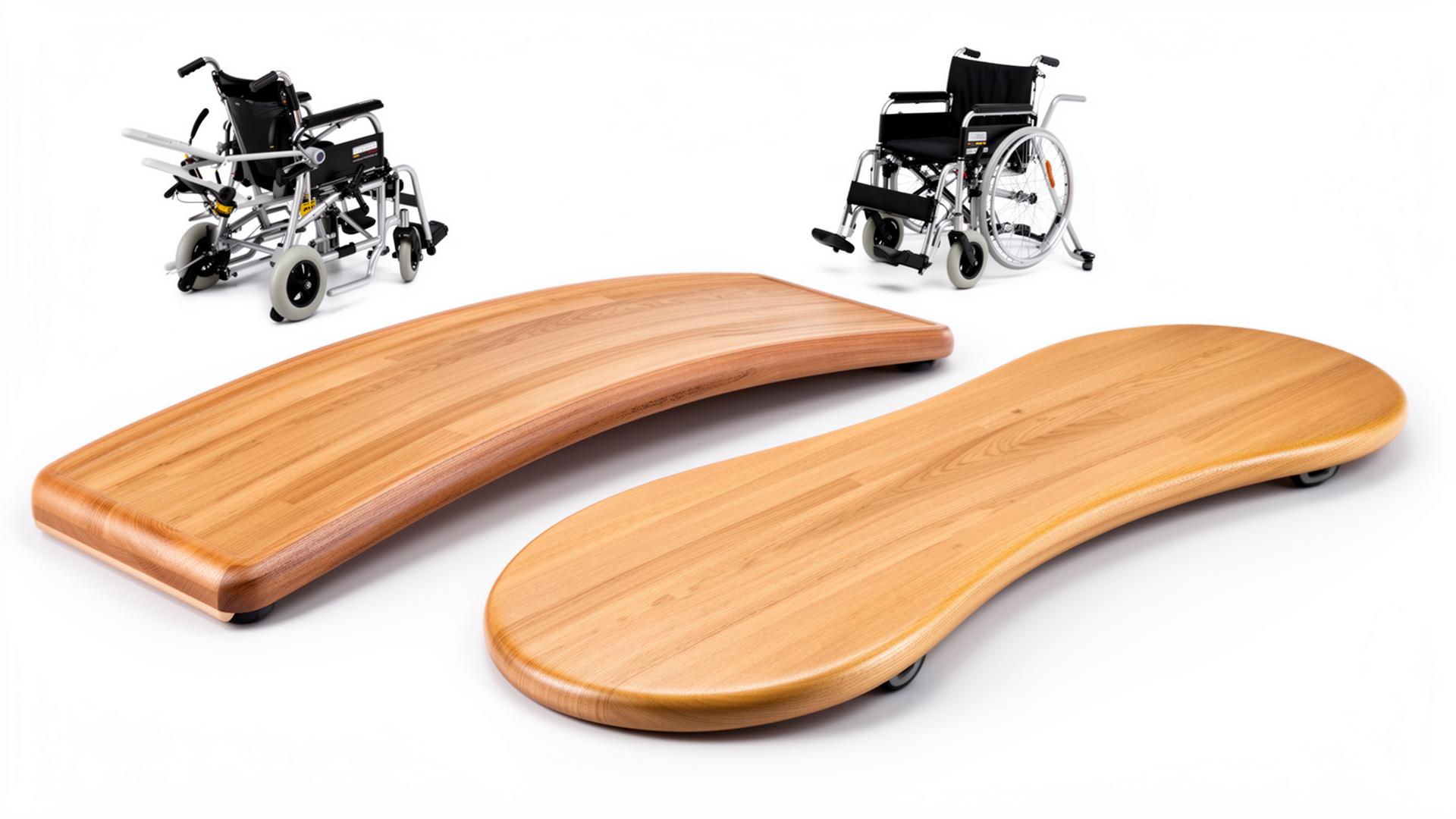
The best transfer boards for patients in 2025 are the SafetySure Curved Transfer Board for wheelchair users, Vive Wooden Slide Board for durability, and Beasy II Glider for 360° pivoting capability. These boards safely bridge the gap between surfaces to assist with lateral transfers while reducing caregiver strain.
Transfer boards—also known as slide boards, banana boards, or glide boards—are essential mobility aids that help patients move safely between surfaces. Whether transferring from a wheelchair to a bed, car, toilet, or shower bench, the right transfer board can reduce caregiver strain by up to 70% while maintaining patient dignity and independence.
According to the Bureau of Labor Statistics, healthcare workers experience 3x more back injuries than workers in other industries, with patient transfers being a leading cause. A quality transfer board doesn't just make transfers easier—it protects both patients and caregivers from injury.
After testing over 20 transfer boards across different materials, designs, and weight capacities, we've identified the best options for various needs. Our reviews consider durability, slide quality, weight capacity, ease of use, and real user feedback from patients and caregivers.
Quick Comparison: Best Transfer Boards 2025
| Product | Rating | Price | Key Features | Action |
|---|---|---|---|---|
| SafetySure Curved Transfer Board | 4.8/5 ⭐ | $89 |
| View Deal |
| Beasy II Transfer System | 4.7/5 ⭐ | $249 |
| View Deal |
| Vive Wooden Transfer Board | 4.6/5 ⭐ | $45 |
| View Deal |
| Medline Bariatric Transfer Board | 4.5/5 ⭐ | $129 |
| View Deal |
| EZ-Slide Transfer Board | 4.4/5 ⭐ | $59 |
| View Deal |
In-Depth Transfer Board Reviews
1. SafetySure Curved Transfer Board – Best for Wheelchair Transfers
The SafetySure Curved Transfer Board is our top pick for wheelchair users thanks to its ergonomic curved design that follows the natural arc of the body during transfers. Made from high-quality polycarbonate, it provides an exceptionally smooth slide surface that reduces friction and skin shearing.
The 400-pound weight capacity accommodates most users, while the tapered ends slide easily under the thigh without uncomfortable pressure points. Multiple length options (24", 27", and 30") let you match the board to your transfer distance.
Pros
- Curved design ideal for wheelchair transfers
- Smooth polycarbonate surface reduces friction
- 400 lb weight capacity
- Multiple length options available
- Lightweight yet durable construction
Cons
- Premium price point
- Not ideal for straight bed-to-chair transfers
- Slick surface requires caution
Our Verdict:
The SafetySure Curved Transfer Board is the best choice for wheelchair users who need frequent, comfortable transfers. The curved design and smooth surface make it exceptionally easy to use.
2. Beasy II Transfer System – Best for Pivoting Transfers
The Beasy II takes a revolutionary approach to patient transfers with its 360-degree rotating seat disc. Instead of sliding across a flat surface, users sit on the rotating disc which pivots smoothly between surfaces—completely eliminating skin shearing and friction burns.
This system is especially valuable for patients with fragile skin, pressure sores, or limited upper body strength. The disc rotates on ball bearings for effortless movement, and the design allows transfers even when surfaces aren't at the same height.
Pros
- 360° rotating disc eliminates shearing
- No sliding required—ideal for weak upper body
- Works with uneven surface heights
- Excellent for patients with skin concerns
- Ball-bearing construction for smooth rotation
Cons
- Higher price than traditional boards
- Requires more caregiver assistance initially
- Larger/heavier than simple slide boards
Our Verdict:
The Beasy II is the premium choice for patients who struggle with traditional slide boards or have skin integrity concerns. The rotating mechanism is a game-changer for safe, comfortable transfers.
3. Vive Wooden Transfer Board – Best Budget Option
The Vive Wooden Transfer Board proves you don't need to spend a fortune for reliable performance. Made from solid hardwood with a lacquered finish, this board provides excellent durability and a smooth sliding surface at an affordable price point.
At 24 inches long and 8 inches wide, it's the classic straight-board design that's been helping patients transfer for decades. The natural wood construction feels sturdy and reliable, with a 350-pound weight capacity suitable for most users.
Pros
- Excellent value for money
- Solid hardwood construction
- Smooth lacquered sliding surface
- 350 lb weight capacity
- Classic, proven design
Cons
- No curve—less ergonomic than specialty boards
- Heavier than plastic alternatives
- Single size option only
Our Verdict:
The Vive Wooden Transfer Board is the best choice for budget-conscious buyers who need a reliable, durable transfer board without extra features. It does the job well at an accessible price.
4. Medline Bariatric Transfer Board – Best for Heavy Users
The Medline Bariatric Transfer Board addresses the needs of heavier patients with its impressive 600-pound weight capacity and extra-wide 12-inch surface. The reinforced construction uses high-strength materials that won't flex or bend under heavy loads.
At 30 inches long, this board bridges larger gaps between surfaces while the wider design provides more stability during transfers. Hand-cut slots at each end improve grip for caregivers during positioning.
Pros
- 600 lb weight capacity
- Extra-wide 12" surface
- 30" length bridges larger gaps
- Reinforced high-strength construction
- Hand slots for caregiver grip
Cons
- Heavier and bulkier than standard boards
- Higher price point
- May be too wide for some wheelchairs
Our Verdict:
The Medline Bariatric Board is essential for heavy patients who need a transfer board they can trust. The 600 lb capacity and wide surface provide confidence and safety during transfers.
5. EZ-Slide Transfer Board – Best Lightweight Option
The EZ-Slide Transfer Board prioritizes portability with its lightweight plastic construction that weighs under 2 pounds. Built-in handles at each end make it easy to carry and position, while the smooth surface allows friction-free sliding.
This board is ideal for travel or facilities where multiple boards need to be moved frequently. The plastic construction is also easy to clean and sanitize between uses, making it popular in healthcare settings.
Pros
- Ultra-lightweight under 2 lbs
- Easy-grip handles
- Simple to clean and sanitize
- Affordable price point
- Great for travel use
Cons
- Lower weight capacity (300 lbs)
- Less durable than wood/polycarbonate
- May feel less stable than heavier boards
Our Verdict:
The EZ-Slide is perfect for travelers or anyone who needs a lightweight, portable transfer board. The handles make positioning easy, though heavier users should consider a higher-capacity option.
Transfer Board Buying Guide: What to Consider
Board Material: Wood vs. Plastic vs. Polycarbonate
Wooden boards offer superior durability and higher weight capacities, typically lasting 5-10 years with proper care. They provide a stable, reassuring feel during transfers. Plastic boards are lighter and easier to sanitize, making them ideal for facilities or travel. Polycarbonate boards combine the best of both—lightweight yet strong, with excellent slide surfaces.
Curved vs. Straight Design
Curved transfer boards (also called banana boards) follow the natural arc of movement during wheelchair transfers, reducing the distance you need to slide. Straight boards work better for bed-to-chair or toilet transfers where surfaces are parallel. Consider which transfers you'll do most frequently when choosing.
Weight Capacity
Always choose a board rated for at least 25% more than the user's weight to ensure safety margins. Standard boards support 300-400 lbs, while bariatric boards handle 500-700 lbs. Never exceed the rated capacity—boards can crack or break mid-transfer.
Length and Width
Measure the gap you need to bridge and add 6-8 inches for overlap on each surface. Standard boards range from 24" to 30" long. Width typically ranges from 8" (standard) to 12" (bariatric). Wider boards provide more stability but may not fit between wheelchair armrests.
Special Features
Look for tapered ends that slide easily under thighs, hand slots for caregiver grip, non-slip surfaces for positioning, and rotating discs for patients with skin concerns or limited strength.
Related Articles You May Find Helpful
Frequently Asked Questions
What is a transfer board used for?
A transfer board (also called a slide board or banana board) is a mobility aid that bridges the gap between two surfaces to help people with limited mobility slide from one seat to another. Common uses include wheelchair-to-bed transfers, wheelchair-to-car transfers, and toilet transfers. Transfer boards reduce caregiver strain and help maintain patient independence.
How do I choose the right size transfer board?
Choose a transfer board length based on the gap you need to bridge—typically 24" to 30" for most transfers. Board width should be 8-12" depending on body size. Consider weight capacity (standard boards support 300-400 lbs, bariatric boards support 500-600 lbs). Curved boards work better for wheelchair transfers, while straight boards suit bed-to-chair transfers.
Are wooden or plastic transfer boards better?
Both materials have advantages. Wooden transfer boards are more durable, have higher weight capacities, and provide better slide surfaces. Plastic boards are lighter, more affordable, easier to clean, and better for travel. For daily home use, wooden boards typically last longer. For travel or facility use, plastic boards offer convenience and easier sanitation.
Does Medicare cover transfer boards?
Medicare typically does not cover transfer boards as Durable Medical Equipment (DME) because they are considered convenience items rather than medically necessary equipment. However, some Medicare Advantage plans or Medicaid programs may provide coverage. Private insurance coverage varies—check with your provider. Many transfer boards are affordable enough for out-of-pocket purchase.
How do you safely use a transfer board?
To safely use a transfer board: 1) Position both surfaces at the same height and as close together as possible. 2) Lock wheelchair brakes and remove armrests. 3) Place one end of the board under the thigh, angling toward the target surface. 4) Using small scooting movements, slide across while supporting weight on hands. 5) Keep the board stable and avoid leaning too far forward. A caregiver should stand in front to provide balance support.
Final Verdict: Which Transfer Board Should You Buy?
After extensive testing, the SafetySure Curved Transfer Board stands out as the best overall choice for wheelchair users. Its ergonomic curve, smooth slide surface, and 400 lb capacity make transfers comfortable and safe.
For patients with skin integrity concerns or limited upper body strength, the Beasy II Transfer System with its 360° rotating disc is worth the investment—it completely eliminates shearing and friction.
Budget-conscious buyers will find excellent value in the Vive Wooden Transfer Board, which provides reliable performance at an accessible price point.
Whichever board you choose, proper technique is essential for safe transfers. Consider physical therapy training to learn optimal transfer methods for your specific situation.